
A trip to the past in the heart of Barcelona’s subway system
The Correos metro station in Barcelona, closed to the public since 1972, has opened its doors for the first time to a select group of visitors. This gesture is part of the celebrations of the centenary of the Barcelona metro. The visits, loaded with mystery and nostalgia, take place at night, taking advantage of the fact that the metro service is out of operation. This is because access to the station is by walking along the tracks from Jaume I station. During the months of October and November, a total of 270 lucky people will have the opportunity to explore this forgotten station.
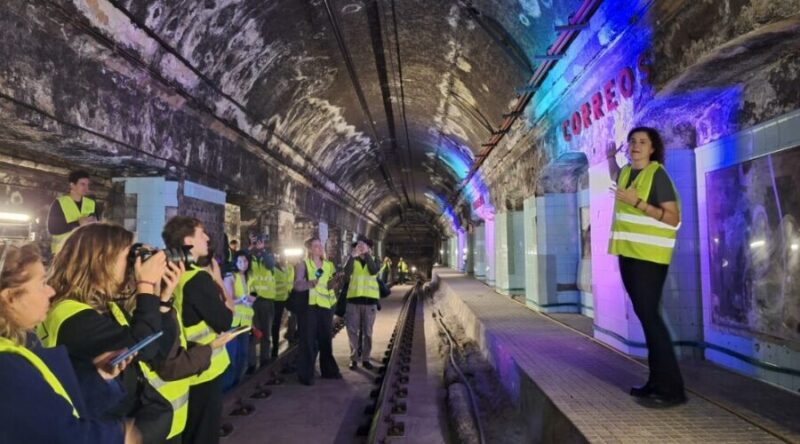
The president of Transports Metropolitans de Barcelona (TMB), Laia Bonet, said that these visits are a sign of the commitment of TMB and the Barcelona City Council to the city’s heritage. The Correos station is not the only one being rediscovered; the ‘We open the metro’ initiative includes other emblematic spaces that are now being offered to the public, such as the Santa Eulalia and ZAL workshops, among others.
Origins and characteristics of the Post Office station
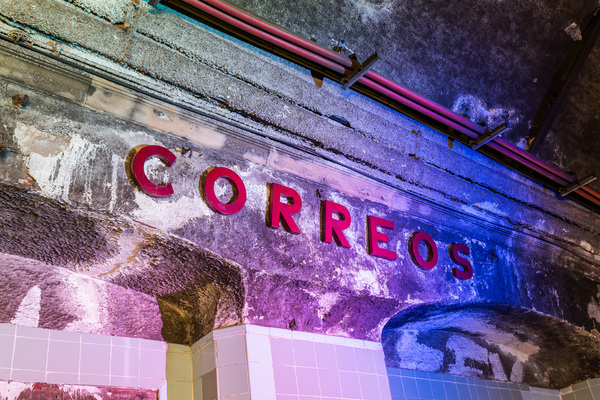
The Correos station has its origins in the 1930’s. Specifically, it was inaugurated on February 20, 1934 as part of the second branch of the Gran Metro of Barcelona and operated until 1972. Its location at the end of Via Laietana, right in front of the iconic Post Office building, gave it its name. After its closure, the entrance became a ventilation shaft that is still in use today.
Originally, the station had a unique layout: it had a single track and two parallel 60-meter long bays. The left aisle housed the track and a narrow platform, while the right aisle was intended only for the use of a platform. Access to the trains was through ten arches in the wall separating the two bays. This peculiar design has contributed to the fact that the Correos station retains an enigmatic and fascinating aura.
Since its inauguration, the station has undergone several renovations. In 1946, it was the first public facility in Spain to have fluorescent lighting. Later, in 1949, the extension of the platforms brought with it a renovation of the cladding and decoration, culminating in 1956 with the installation of gray tiles and a white ceiling.
The importance of the centenary of the Barcelona metro
The centenary of Barcelona’s metro system is not only a celebration of its history, but also an opportunity to rediscover places that have been forgotten. In addition to the Correos station, TMB has opened other places such as Gaudí’s ghost station to the public. Together, these events seek to connect the public with the rich and vast history of the city’s subway transport.
Gaudí’s ghost station becomes a museum
The ‘Let’s Open the Subway’ event has been a resounding success. Places have flown since registrations opened in September, quickly exhausting the 5,033 available to explore the different spaces of the metro. On the free access days, the Gaudí ghost station will receive 720 visitors, while the Correos station will add 270 explorers. This initiative ultimately seeks to bring the people of Barcelona closer to a crucial part of their city, to rediscover and value it.
A legacy in the dark
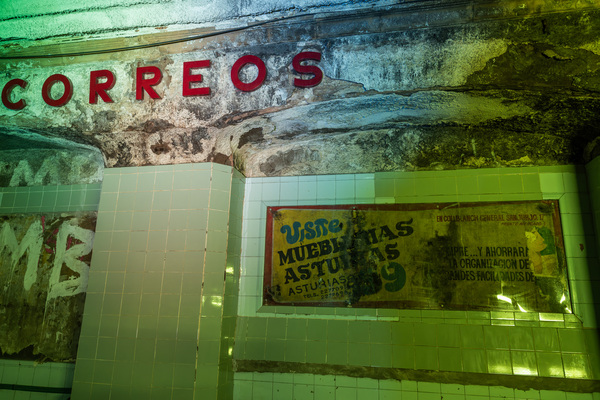
The Post Office station and its ceramic tiles, vintage advertisements and signs remain hidden in the gloom, nurturing its status as a legend among citizens who love the occult and historical. This space, full of history and mystery, represents more than just a vestige of the past: it is a reminder of the progress and evolution of Barcelona’s urban infrastructure.
With the doors open for six days and 18 sessions, a select group of people have had the opportunity to walk through history itself, encountering a subway labyrinth. Correos symbolizes much more than an inactive stretch of subway; it reflects a pivotal moment in urban planning, uniting generations and creating a narrative rich in culture, innovation and heritage.
The stories told, the silences kept, and the architectural beauty make the Correos station a place that, although closed since 1972, will continue to inspire all those who manage to enter its entrails. The metro and its ghost stations are hidden treasures that are reborn in the centenary, inviting everyone to celebrate the heritage of the city.
—