
The city of Barcelona is preparing for an impressive change in one of its most emblematic buildings, the Castell dels Tres Dragons. This building, an architectural jewel of Catalan modernism, is getting ready for a transformation that will turn it into a point of reference in science, dissemination and culture.
The vision of “The Axis of Science”.
The Barcelona City Council has taken a significant step forward by awarding the drafting of the project for the interior of the Castell to the JAAS studio. The project, known as “The Science Axis”, was selected from twenty proposals. It stands out because it seeks to maintain the historical essence of the building – preserving its pavements, ceilings and staircases – while adapting it to its new function as a space for scientific dissemination.
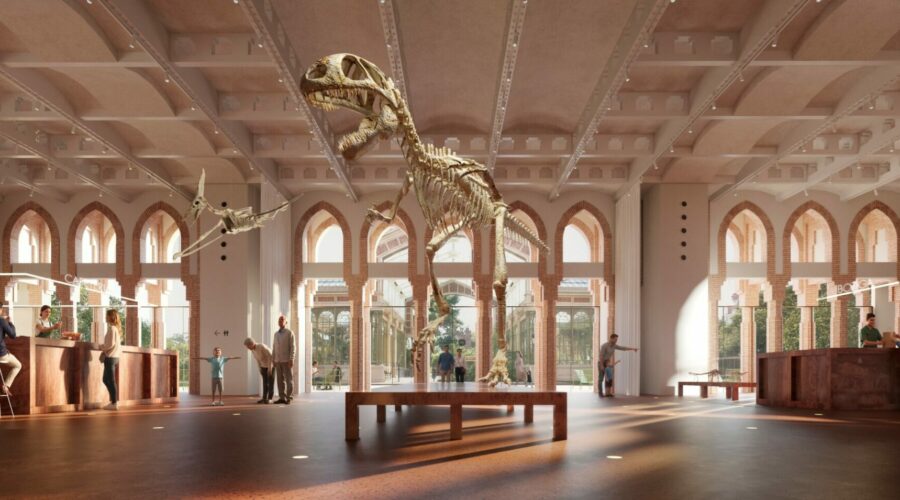
The main idea is to provide a space open to the public. The first floor will be transformed into a large exhibition hall that will offer an experience in science, integrating also a cafeteria. There, outstanding pieces of natural heritage will be exhibited, such as a reconstructed mammoth from Sarrià and various minerals that will capture the attention of visitors.
An open-door museum
In connection with the main objective, accessibility and openness to the public are other central ideas of the project. The Castell, together with the Orangery, the Martorell Exhibition Center and the Umbracle, will form part of a heritage complex known as the Citadel of Knowledge. This space will promote a constant flow between the different facilities, becoming a unified cultural node.
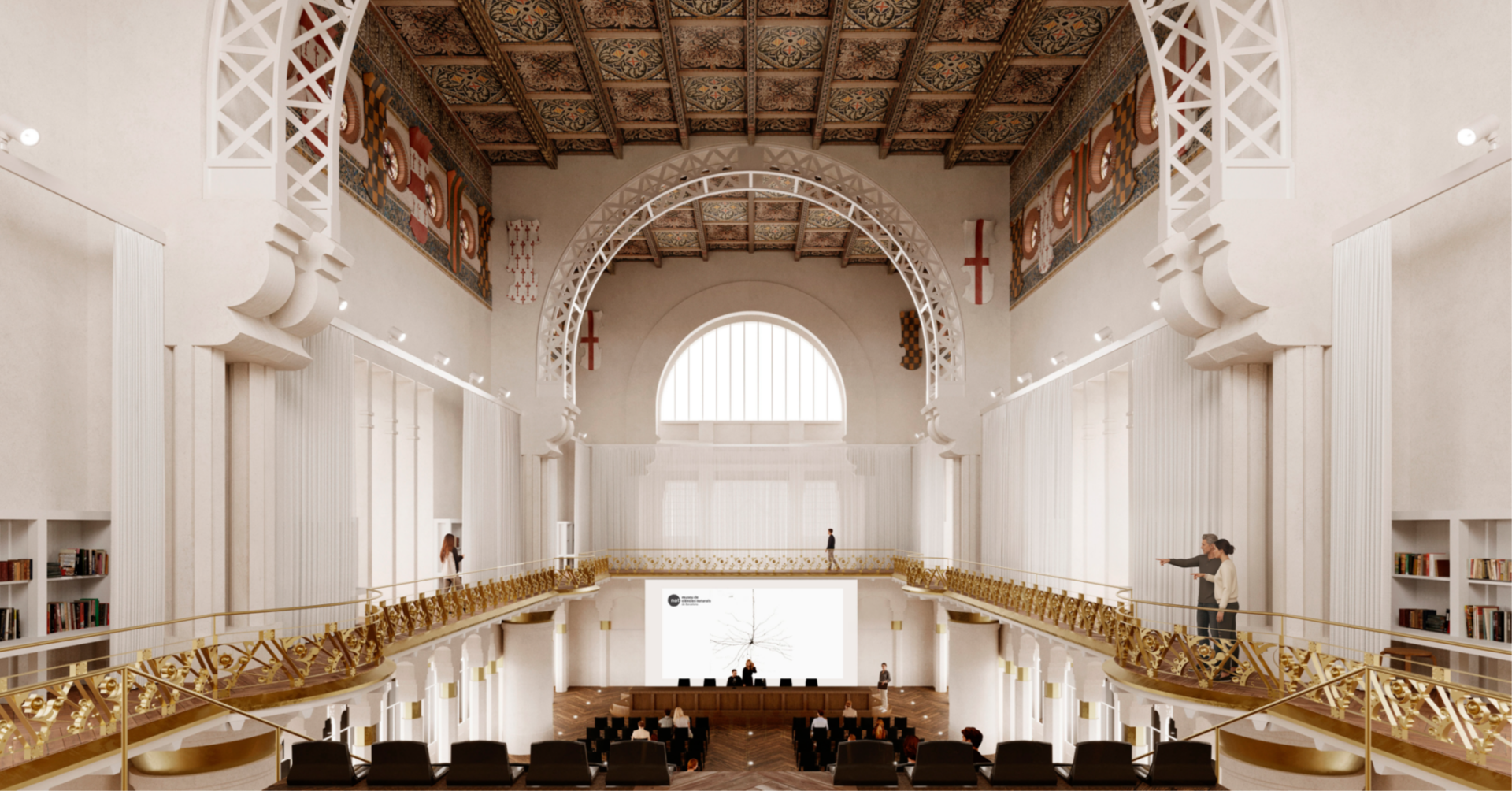
The call to maintain the original heritage is strong. Thus, the assembly hall on the second floor will recover its ornamental features, but with a modern approach that will allow its use as an auditorium for events. Discreet integration of advanced technology is planned, ensuring that the space retains its classical charm.
The library and beyond
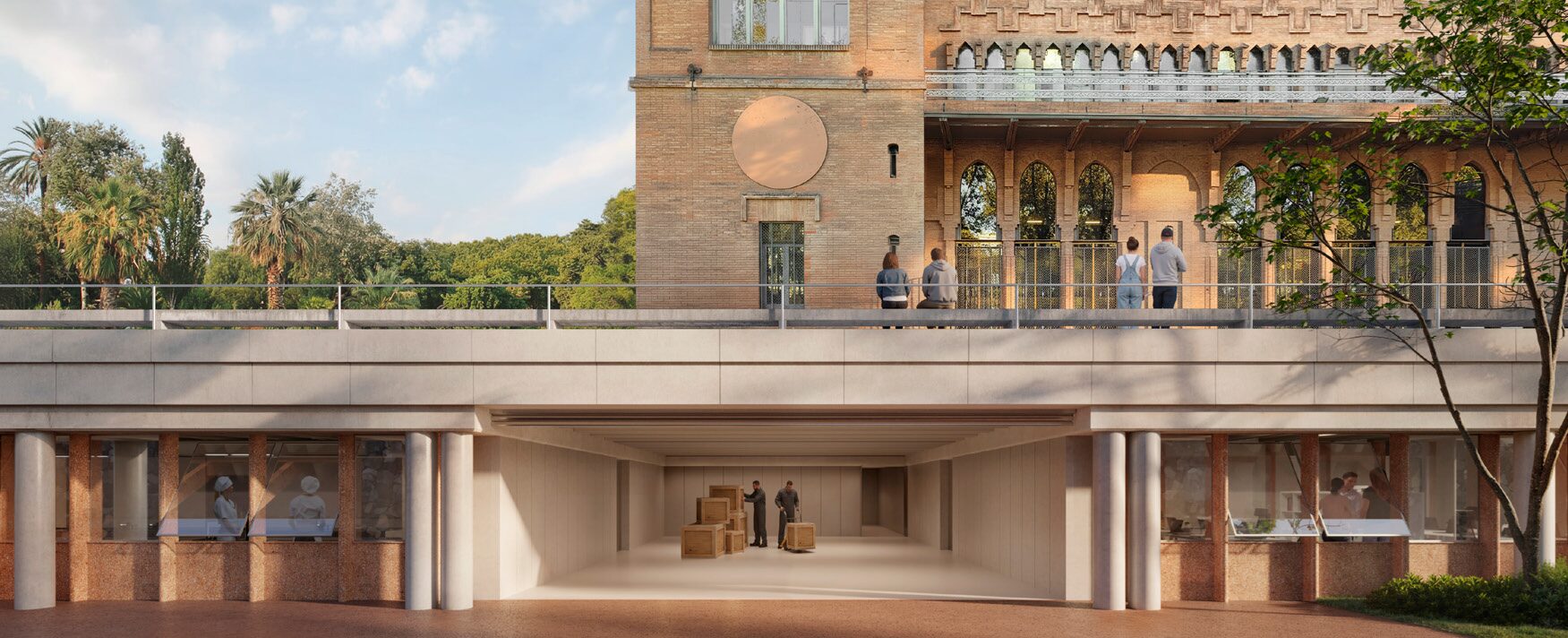
The second floor of the Castell will have a public access library, reinforcing the idea of shared knowledge. It will also serve as a permanent exhibition space to showcase the biodiversity and geology of Catalonia. The basement is not far behind, being intended for more technical roles such as museum work and maintenance areas.
Jordi Valls, fourth deputy mayor and responsible for the area of science, emphasizes that the new Castell will be the gateway to the Citadel of Knowledge. In this way, it seeks to honor the tradition of being a pillar in scientific dissemination, while accompanying the progress of other projects in the same park.
Project underway: recovering the exterior
Work on the exterior of the Castell is in full swing. They are focused on restoring the façade, interior arches and exterior staircases, as well as making energy improvements. With a budget of approximately €8 million, this phase is expected to be completed during the first quarter of 2027. It is worth mentioning that, in order to facilitate the works, the biological collections housed in the Castell were moved to another location of the Museum of Natural Sciences.
The Citadel of Knowledge: a new scientific epicenter
The great project of the Citadel of Knowledge not only incorporates the recovery and new function of the Castell, but encompasses an ambitious plan to turn the Ciutadella Park into a center of innovation and culture unparalleled in Europe. In addition to the rehabilitation of the historic buildings, new spaces dedicated to research will be built, such as the PRBB Ciutadella and the Institute of Evolutionary Biology.
All of this is aimed at consolidating Barcelona as a leader in biodiversity research and preservation, assuming a more prominent role in science and culture at a global level.
With detailed planning for every aspect of the project, the future of the Castell dels Tres Dragons and the Citadel of Knowledge is shaping up to be an exciting new page in Barcelona’s history. The commitment to science, outreach and research promises not only to preserve the historical heritage, but to expand it into a future of infinite possibilities.
—