

This weekend, Barcelona opens the doors to one of its best kept secrets: Gaudí’s ghost station. To mark the 100th anniversary of the city’s metro, 360 lucky visitors will have the opportunity to explore this fascinating corner that has been closed to the public since 1968. The guided tours offer an exclusive glimpse into a part of Barcelona’s subway history, allowing visitors to discover the mysteries of this unique place.
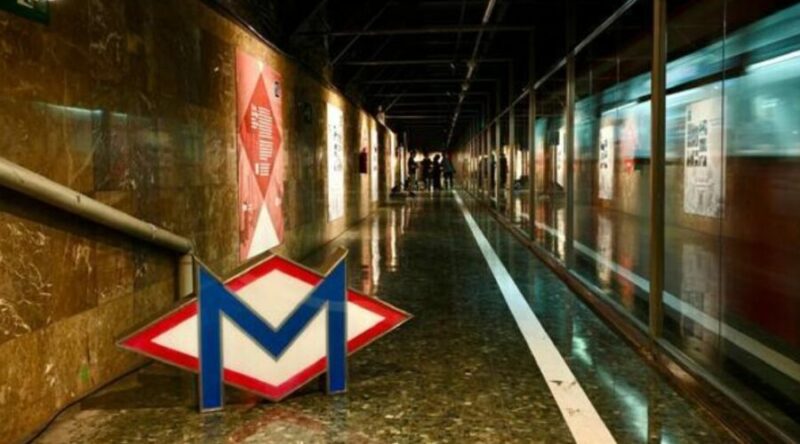
A walk through history at Gaudí’s Station
Gaudí station, originally planned as Sagrada Família, is located between Sagrada Família and Sant Pau / Dos de Mayo stations on line 5. Its history dates back to the 1960s, when it was part of an ambitious extension of metro line 2. However, the complications that arose in its construction, due to the conflictive subsoil of the area, led to a curious outcome.
In the end, the authorities decided to integrate the already built section of line 2 with the existing line 5. This left Gaudí and its nearby sister, Sagrada Família, too close to be practical within the same metro system. Thus, Gaudí never saw the light of day, remaining anonymous. Today, the station sits 11.65 meters deep, beneath Gaudí Avenue, decorated with brown marble and gray pavement, an elegant echo of its time.
Exploring what’s beyond the tracks
During this weekend’s visits, groups will have the opportunity to learn more about the rich history of the Barcelona metro thanks to visual presentations that are part of the space “Chronicle of a journey. History of the Barcelona metro network”. This initiative uses digital tools to relive the 100 years of the network, ensuring that visitors not only see, but also learn.
Although the Gaudí platforms have never been open to the public, they have served as a stage for advertising campaigns and have even been decorated during Christmas. In addition to the walk through the station, visitors will be able to visit “El Espacio Gaudí”, where TMB organizes various cultural and educational activities. This space has hosted meetings and workshops for international groups interested in public transport, symbolizing the potential of a space that was once forgotten.
Upcoming destinations: the Post Office ghost station
The opening of the Gaudí station is not an isolated case. From October 20, visits will move to the Post Office station, operational between 1934 and 1972. Here, visitors will have to walk along the track, as this station lacks direct access from the street. These visits, intended for the adventurous who are not afraid of the dark, coincide with early mornings when the metro will be out of service.
The journey to the Correos station is another highlight of the centenary celebrations. It is part of a program of free tours of several enclosed spaces in the metro network, whose 5,033 available places sold out almost immediately after its launch in September. With any luck, new opportunities will open up in the coming weeks for those still hoping to experience these historic sites.
Rediscovering Barcelona’s subway jewels
In addition to the ghost stations, TMB has planned a tour of other hidden enclaves of the metro system, including the driving simulator room, the Metro Control Center, the Santa Eulàlia workshops, and the Mercat Nou power substation. These events underscore the importance of the metro in Barcelona’s urban transformation, giving citizens the opportunity to reconnect with their roots through the infrastructure that has shaped the city for a century.
The rediscovery of these stations and other subway gems symbolizes an effort to reconnect Barcelona’ s history with its citizens and visitors. As part of the centennial, each station, corridor and platform tells a story that, although it may have fallen asleep, is ready to be shared once again. This is much more than a series of simple guided tours; it is a celebration of what was and what is still possible.
—