
The esplanade in front of La Farinera del Clot is dressed up to receive a truly special exhibition. On the occasion of the centenary of the Barcelona Metro, the historic trains of the 100, 300, 400, 1100 and 3000 series come back to life, restored and ready to be admired by all. This is a unique opportunity to get to know the railway heritage of Barcelona from a fresh and unprecedented angle.
Preparations for a centennial exhibition
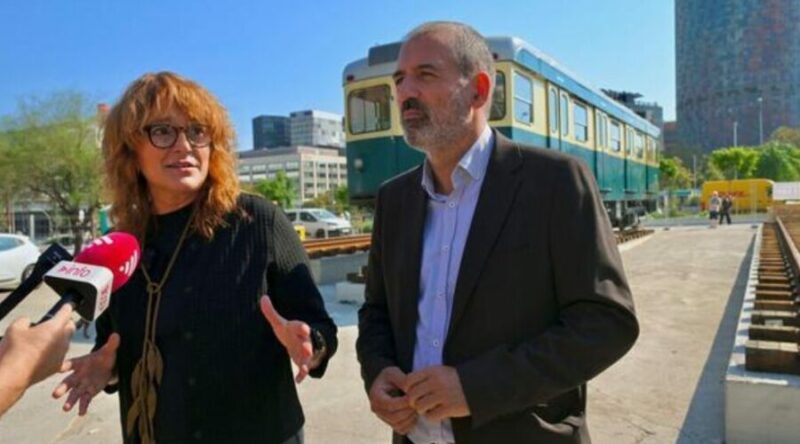
The first to arrive on the scene were the 400 and 1100 series cars. They are already installed in place, ready for the public. In the next few days, the remaining elements will complete the railroad quintet. The effort invested in this exhibition is no small feat. The president of TMB, Laia Bonet, has expressed her satisfaction for the arrival of these historical pieces, which she described as “heritage of our city”. Gratitude to all those who have made this project possible is latent.
It is not a minor detail that for the first time these trains leave the subway tracks to be shown in the open air. This change of scenery required finding a suitable space in the city capable of accommodating the dimensions of these majestic convoys. The generous esplanade in front of La Farinera del Clot, with its rich railway past, was the place chosen for this event.
Protecting a cultural treasure
To protect these centuries-old giants from the elements, a tent of more than 1,200 square meters will be installed. With this measure, the trains will be sheltered, thus preserving their integrity for the enjoyment of all. Many of the cars are recognized as Cultural Assets of National Interest (BCIN), which further highlights the importance of this exhibition.
Visitors to the exhibition will be able to walk around the trains and, most exciting of all, explore the interior. Walkways have been provided to allow easy and safe access, ensuring that no one misses out on the experience. Accessibility has been a priority, with stairs and ramps available to ensure that everyone can enjoy a walk through Barcelona’s railway history.
Meticulous restoration process
The process of restoring these trains has not been simple. Begun in 2024, it was a painstaking effort to bring each car back to life. The General Directorate of Cultural Heritage of the Generalitat supervised everything, ensuring every detail. Intensive cleaning, repairs to floors, windows, frames, and much more have been carried out.
It wasn’t just a matter of cosmetics; the lighting was restored and even the original colors of each train were revived, just as they were when they ceased commercial operation. The team also removed asbestos from certain components, ensuring that everything is completely safe for visitors and staff.
Of course, all this work came at a cost. The restoration required an investment of 2.1 million euros, a price that will undoubtedly be worth it to prolong the life and enjoyment of these jewels of public transport.
An enclave steeped in history
The choice of La Farinera del Clot as the site for the exhibition was not accidental. This space has an intrinsic connection to Barcelona’s railway history. In the past, the railroad tracks crossed here, with workshops right next to the current cultural center. Although recently occupied by work on the Plaça de les Glòries, the ground has been leveled and prepared to make way for the old tracks that will support the trains of yesteryear.
History and progress are intertwined in this event. From its historic beginnings to the present day, the Barcelona metro remains a symbol of evolution and connection in the city. Now, this exhibition invites us to learn more about its rich narrative, giving us the opportunity to admire these extraordinary relics of the past up close.
For all locals or visitors who want to live this unique experience, the trains will be on display from the week of November 10 until January 6. There is no excuse to miss one of the most endearing exhibitions of the year, with free admission and the chance to take a piece of history home with the products of the centenary of the metro.