

The Barcelona metro has put on its best clothes this 2025, and no wonder. The transfer at Passeig de Gràcia station, more specifically, between lines L3 and L4, has ceased to be just a transit route to become a sound and visual spectacle thanks to the ARS GRACIA project.
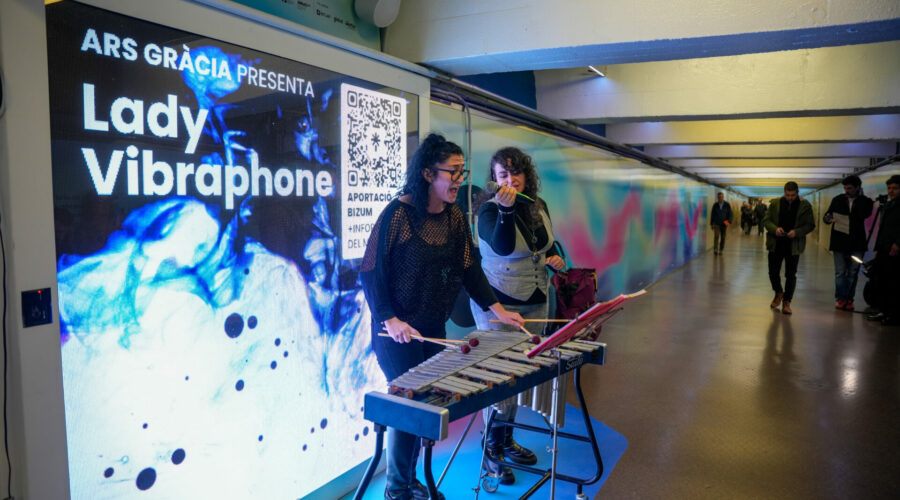
A multisensory walk in the heart of Barcelona
Starting today, this section of the metro welcomes a new interactive world that fuses sound and image through a masterful orchestra of artificial intelligence. The ARS GRACIA pilot test, designed and executed by the Catalan platform ARTIFÍCIA, invites passersby to immerse themselves in a completely new experience, where even the most carefree step can create art.
With 35 of the 237 meters of the corridor dedicated to this installation, passengers are enveloped in an environment that reacts to their movements. Music and images are generated in real time, turning each ride into a unique composition of sounds and lights. This experience completely redefines what it means to walk along this busy corridor.
The power of artificial intelligence in music
The technology behind the project is impressive. Through a system called ARS, artificial intelligence meets algorithmic composition to transform the entire space into a sound and light scheme. Pedestrians don’t just cross the walkway; they are part of the show, turning their movements into musical notes that embellish the environment.
In addition, the experience is not only digital. A stage, known as ARS STAGE, has been set up for the subway musicians, members of the Association of Street and Subway Musicians of Barcelona (AMUC), to perform their songs in an environment that magnifies their art thanks to advanced visual technology.
Urban innovation in celebration of the 100th anniversary of the metro
This innovative installation not only celebrates music and technology. It is also part of the commemorative events of the Barcelona Metro Centenary. The implementation of ARS GRACIA is not only a showcase of creativity and technology in perfect alliance, but the fulfillment of the commitment to users to offer them a better travel experience.
With the support of organizations such as Transportes Metropolitanos de Barcelona (TMB) and in collaboration with the BIT Habitat Foundation and the Barcelona Music Lab Foundation, the project seeks to be a creative solution to make the passage through the subway a much friendlier experience. It has been months of work and selection of the best proposals, among which ARS GRACIA shone with its own light, obtaining significant funding for its implementation.
The voices that bring the project to life
The premiere of the facility was attended by the mayor of Barcelona, Jaume Collboni, and the first deputy mayor, Laia Bonet. Both were present to admire the birth of a new cultural node in the city and, to everyone’s surprise, enjoyed a performance by the popular musical group Sidonie at the ARS STAGE.
Collboni highlighted the importance of integrating culture and innovation in public spaces, underlining how these initiatives not only enrich the urban environment, but also enhance the daily experience of thousands of subway users. The installation not only provides an entertaining environment, but also becomes a source of inspiration for artists and commuters alike.
Beyond a subway corridor
The success that ARS GRACIA promises goes beyond its immediate effects. The pilot test has become an example of perfect symbiosis between digital and analog, between human art and artificial intelligence. This corridor, once simply a place of transit, now paints a future where technology and art meet to enrich everyday life.
With the implementation of this system, Barcelona not only confirms its status as a key innovation hotspot, but also demonstrates how small urban interventions can transform people’s experience, making the metro journey more than just a simple commute.
Conclusion
ARS GRACIA emerges as an innovative cultural paradigm, capable of showing that public space can be a canvas where technology and art coexist for the enjoyment of all. During the three months that this test will last, we will observe not only its practical impact, but also the potential for future applications in other urban contexts.