
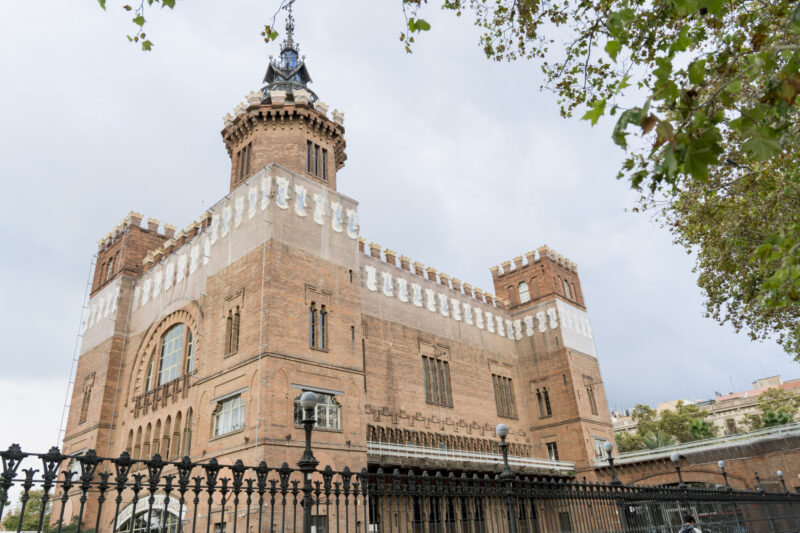
The Castle of the Three Dragons is preparing for an extraordinary change. This majestic building, located in Barcelona, has been home to precious collections of zoology and geology belonging to the Museum of Natural Sciences. But now, works on its facades need to place more than 1.5 million specimens in safekeeping to ensure their conservation and facilitate the rehabilitation of the space.
Why collections are moved
The purpose of the move is to preserve the collections of vertebrate and invertebrate animals during the works. These works will focus on the restoration of the facades and energy improvement of the historic building. Thus, ensuring its integrity is a priority before work begins, scheduled for the first quarter of 2026.
The Barcelona City Council has already begun the process of relocating some 20,000 vertebrate specimens to the Museu del Fòrum. In the meantime, about 1,500,000 invertebrate specimens will temporarily find new homes in other areas of the castle itself, specifically on the first floor and basement.
The logistics behind a titanic move
Moving more than 1.5 million specimens does not happen overnight. It requires careful planning and experienced hands. For this monumental effort, a team of 20 people is working against the clock. Together with the museum staff, they work through the five detailed phases of the moving process.
Stages of the transfer
1. Initial preparation: This includes the organization of packing spaces, storage of boxes and the installation of freezers for quarantine of specimens outside the building. It is crucial to establish a place where objects can be adequately protected throughout the process.
2. Packing: With extreme care, specimens are packed using appropriate materials, immobilized and labeled to ensure that each piece arrives at its destination safe and sound.
3. Quarantine by freezing: Before their final transfer, some specimens undergo a freezing process. This seeks to eliminate possible pests that could affect them or contaminate their new home.
4. Transport to the Museu del Fòrum: The vertebrate collections find temporary shelter in new facilities, better air-conditioned and suitable for their conservation.
5. Relocation of invertebrates: They are moved from the upper floors of the castle to the first floor, where the vertebrates used to live.
A small number of parts, due to their size or fragility, require specialized treatment. This ensures that no parts are damaged.
A versatile castle as a belt of knowledge
The Director of the Museum of Natural Sciences, Carles Lalueza, stresses the importance of this move as part of an ambitious transformation plan. The aim is to convert the Castle into a center open to the public, versatile and with diverse spaces that continue with its scientific mission. Once the renovation of the facades has been completed, the focus will turn to the interior of the building. A cafeteria-restaurant, exhibition areas and an impressive auditorium are planned here. The Museum’s scientific and educational universe will gain presence and accessibility.
This change not only has a necessary function of preservation and renovation of the space, but also expands the scientific and cultural mission of the museum. The location of the Castle of the Three Dragons in the heart of the Ciutadella Park gives it a key role within the “heritage axis of the Ciutadella of Knowledge”. This visionary project seeks to establish the area as an epicenter of innovation, research and scientific dissemination in Europe.
The Museum of Natural Sciences in action
Made up of various facilities distributed throughout the city’s important parks, such as the Botanical Garden and Martorell, this museum encompasses a rich 147-year history and houses an impressive heritage of more than three million specimens. As a consortium of the Barcelona City Council and the Generalitat de Catalunya, the Museum has the necessary credentials to lead the advancement of Barcelona as a scientific and cultural reference.
With this monumental task of relocation and rehabilitation, Barcelona demonstrates its commitment to preserve not only the physical integrity of historic structures, but also the valuable knowledge they hold. All of this positions the Museum of Natural Sciences as a crucial actor in the scientific and cultural evolution of the city.