
Every September 11, Catalonia dresses up to celebrate the Diada, a day full of symbolism and vindication. This date marked on the Catalan calendar recalls the fall of Barcelona in 1714 to the Bourbon forces. However, it is much more than a simple reminder of an ancient war. It is a day that evokes reflections and resurgent fights about identity, autonomy and freedom of the Catalan people.
The origins of September 11
The history of the Diada dates back to September 11, 1714, when after 14 months of siege by the Bourbon forces, the city of Barcelona yielded to the troops of the Duke of Berwick. This defeat meant the elimination of Catalan institutions through the Nueva Planta Decree in 1716. For almost two centuries, this date was not part of the popular celebrations, until 1886, when a Catholic group remembered the fallen of the conflict in a mass in the Parish of Santa Maria del Mar. From that solemn act, the event began to take shape and finally acquired the patriotic and resistance aspect that it has today.
The evolution of the Diada in the 20th century
The impact of September 11 began to be cemented when, in the late nineteenth century, tributes began to be made in honor of the local leader of the time, Rafael Casanova. However, it was in the 20th century when the Diada gained notoriety and relevance, especially during the Second Spanish Republic. In 1931, this date gained strength and reaffirmation of freedoms, symbolizing the desire to regain the autonomy that Catalonia once had.
With the arrival of Franco’s regime, this act was once again banned, but its importance was not diluted. Quite the contrary. The symbolism of the Diada was reinforced, becoming a beacon of cultural and political resistance that, after Franco’s death, regained its place in the public sphere. In 1980, the Parliament of Catalonia proclaimed September 11 as the Catalan National Day, consolidating its place in the heart and identity of the Catalans.
The events of the Diada today
Nowadays, the Diada is not only a reflective celebration, but also a platform to express oneself and demand rights. The floral offerings at the monuments dedicated to Rafael Casanova and Josep Moragues are tradition, and the events at the Fossar de les Moreres cannot be missed. This place has become a symbol of the sacrifice for Catalan liberties, where the fallen defenders of 1714 were buried.
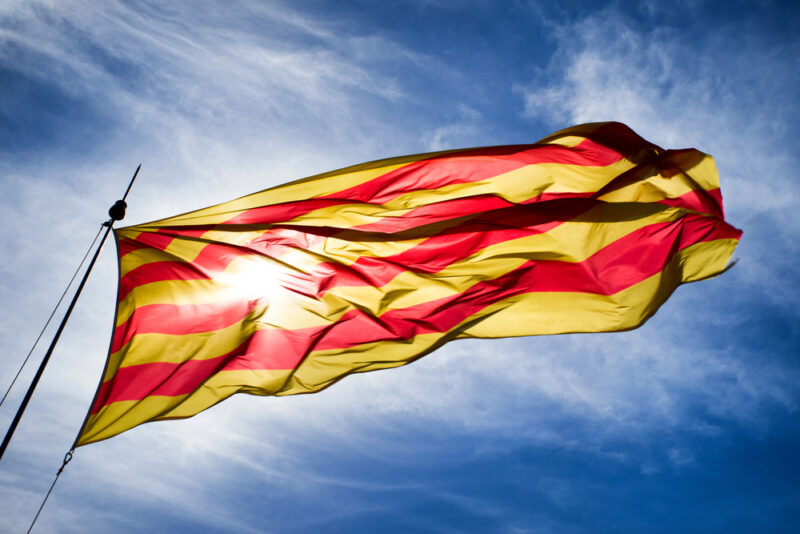
In addition to formal and institutional acts, demonstrations of a vindictive nature also predominate. It is common to see Catalan citizens hanging flags such as the “senyera” or the “estelada” on their balconies, while the anthem of Catalonia, “Els Segadors”, sounds in the streets. Concerts, speeches and rallies are also part of this day where art, politics and historical remembrance are mixed.
The reason for such a symbolic date
The choice of September 11 as a national holiday was not a random decision. Although there was debate at the time as to whether Sant Jordi should be the day highlighted in the Catalan calendar, overcoming the wounds of defeat and the call not to forget past suffering brought weight and resonance.
In short, the Diada embodies a spirit and a narrative that unites tradition and modernity, resistance and vindication. It is a testimony to the painful past, but also to the unshakable desire to perpetuate a unique cultural identity. Every year, the streets vibrate with the echo of past histories that are still so alive, and the Catalans maintain the memory of those who said “no” to submission, celebrating not only the memory of a lost victory, but the triumph of a culture and its people.