

The works to build the future primary care center, better known as the CAP Raval Nord, have uncovered an amazing archaeological discovery under the Misericordia Chapel in Barcelona. Who would have imagined that in the middle of a modern construction site centuries of history would be found? Thanks to the Catalan Health Service (CatSalut) and its initiative, the city can now contemplate this valuable find, which invites us to rewrite forgotten parts of the Raval’s past.
A window to the medieval Raval
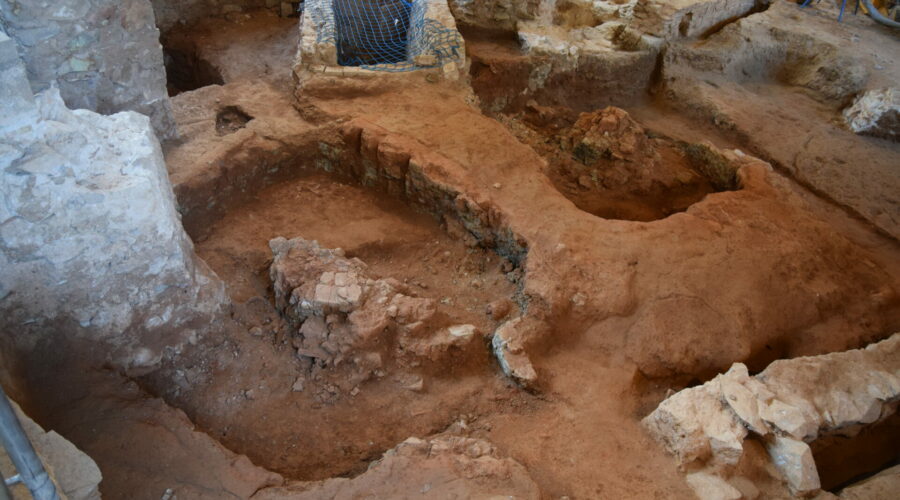
Excavations have brought to light more than 700 years of uninterrupted history. From the 14th to the 20th century, this space has undergone countless transformations. In its beginnings, during the late Middle Ages, the area had a specialized use in craft activities, as suggested by the remains of two late medieval ovens found. These furnaces, two meters in diameter, with rubefacted walls, were part of a probable center for the production of ceramics or construction elements. Imagine the hands that worked there centuries ago!
Archaeological Discoveries in the Pedralbes Monastery
With the passage of time, and between the 15th and 16th centuries, the site experienced some abandonment, allowing the presence of natural strata and ambiguous structures that may have been used for agricultural activities. However, this space did not remain inactive for long.
The rebirth of the welfare era
In the XVI-XVIII centuries, everything changed. The construction of an undetermined building prior to the Casa de la Misericordia marked a new chapter in the history of the site. Walls, pavements and structures such as a cistern and several wells were discovered. All this evidences a more organized use of space, probably with a more functional and stable vocation.
Archaeological Park of the mines of Gavà
As if it were a major architectural project, the hydraulic system of the site began to be reorganized at this time, a crucial aspect to allow the transition to a care complex. The construction of the northern nave and the adaptation of the water system reflect how much effort was invested to transform it into a space of help and welcome.
The art of reusing the old
The 19th century witnessed a master in the reuse of old structures. It is at this time that the site began its journey to become the current Chapel of Mercy, which was built in 1884. Throughout this time, various alterations were made to adapt the site to new uses, but many of the old walls and pavements were retained. All of this shows a pattern of constructive and ingenious use that has endured over time.
The work to make this heritage space visible and valuable is still in progress. The amount of remains found transforms this subsoil into a window that allows us to understand how the Raval has evolved and transformed, from its productive origins in the Middle Ages to the consolidation of its function as a welfare complex.
Future possibilities and what is to come
There are still mysteries to be discovered. The team of archaeologists, under the technical direction of Emiliano Hinojo first and Daniel Vázquez now, continues to work intensively in the exploration of this hidden legacy. The findings could continue to bring medieval or even older surprises.
This important project not only seeks to preserve the history already discovered, but also to value all those transformations that have given rise to the current space. The collaboration with the CAT Arqueòlegs team has been essential to ensure that each piece detached from the past can be properly understood and contextualized.
A trajectory of changes and unique adaptations
The wonders that now emerge from the bowels of the CAP Raval Nord in Barcelona speak not only of an artisanal past, but of a trajectory of unique changes and adaptations. From ceramic production in the late Middle Ages to the creation of today’s Chapel, each transformation has added another layer to its history.
The discovery of the site beneath the chapel is a true gem for the city, providing a tangible connection to the Raval’s flourishing past. Undoubtedly, as excavations continue, this site will continue to provide invaluable insights into how spaces are built and transformed over time.