
Those who are looking for a different way to work their emotional world sometimes start with something unexpected, like a Kintsugi workshop in Barcelona. Kintsugi workshop in Barcelonabecause broken ceramics are quickly understood and, moreover, avoid empty discourse. As soon as someone joins a crack with “gold”, the metaphor is activated and no longer speaks of plates, it speaks of how a person is rebuilt when something breaks him or her from the inside.
Kintsugi explained without cheap romanticism
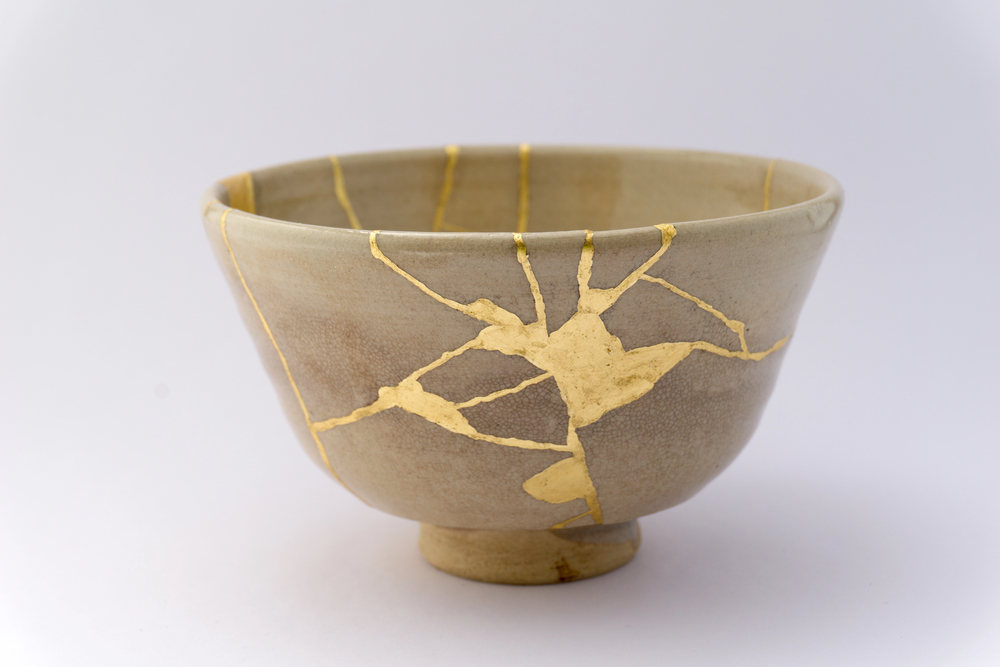
Kintsugi is an artisanal technique born in Japan that repairs fractured ceramics with resin and metal powder, usually gold, although it can also use silver or platinum. The key is not in the material, but in the intention, because the method does not hide the break and does not try to hide it with an “invisible” repair. On the contrary, it marks the scar and turns it into an aesthetic feature, as if the piece were saying “this happened to me” and yet here I am.
This idea is provocative because it clashes with what is usually asked of almost everything, from objects to relationships, since it is expected that what is broken will disappear or, at the very least, not be noticed. However, kintsugi poses the opposite: the crack is part of the story and therefore deserves a visible place, even a beautiful place. It is not surprising, therefore, that this technique has become a contemporary symbol of resilience, although it is advisable to use this word wisely and not as a slogan.
A historical origin with more logic than meets the eye
The best known version places the birth of kintsugi at the end of the 15th century, when a Japanese leader sent some tea bowls to China to repair them. The repair returned with metal staples and the result was seen to be crude, inelegant and, above all, unbecoming of a valuable object. From there, Japanese craftsmen sought a more aesthetic solution and ended up creating a technique that not only fixed, but transformed the piece.
That “not just fix” is important because it explains why kintsugi became established as more than just a fix. In fact, some pieces repaired with this method were valued more than intact pieces, since a perfect piece may be beautiful, but a piece that went through a breakage and came out reinforced has a narrative. Moreover, that narrative is visible to the naked eye, which adds an almost ceremonial point to the experience of using it.

What kintsugi teaches when viewed as an emotional mirror
When someone works kintsugi as a metaphor, they stop thinking of “repair” as a return to the starting point. That return does not exist, or at least it usually does not exist, because the experience changes the person just as the breakage changes the piece. That is why the most powerful learning of kintsugi is not “it can be fixed”, but “it can be rebuilt in another way” and still make sense.
In this process, an idea that many people avoid comes up: scars do not always represent a failure. Sometimes they represent an attempt, a stage or a difficult decision. Then kintsugi helps to reformulate the internal narrative, because it forces to look at the crack with attention and to work on it without haste. In addition, the manual gesture introduces calm, as busy hands tend to lower the mental noise, and that makes it easier for the emotions to sort themselves out without the need to push them.
There is also a healthy control effect, because a breakage is unsettling, but repairing piece by piece restores a sense of agency. It is not a matter of denying what happened, but of choosing what to do with what happened. Therefore, kintsugi functions as a symbolic training to sustain the imperfect without getting into self-demand or shame.
Real benefits of approaching kintsugi in everyday life
The first benefit is obvious: kintsugi trains the eye to recognize beauty where before it only saw harm. This is not magic, it is practice, and practice changes the filter through which reality is interpreted. In addition, kintsugi forces to respect the times, because the repair needs steps, drying and precision, so it breaks with the logic of “I want it now” that generates so much anxiety.
The second benefit has to do with self-acceptance, although it should not be confused with resignation. Self-acceptance here means to stop fighting with one’s own history and start integrating it with more emotional intelligence. Along these lines, kintsugi can help to reduce repetitive self-criticism, because the crack ceases to be experienced as a stain and begins to be seen as part of the journey.
The third benefit is more bodily than it sounds, as manual work can lower the level of arousal, improve sustained attention and create a sense of “presence” that many people seek without finding. No need to call it mindfulness if that word tires, but the effect is similar: the focus narrows, the body regulates and the mind breathes.
Kintsugi and art therapy when symbol becomes tool
Halfway through, many people connect kintsugi with creative therapeutic practices, because the symbol works best when working with the hands and not just with ideas. This is where art therapy in BarcelonaThe art therapy in Barcelona proposes a space where creation is used to explore emotions, lower tension and give form to what is difficult to say with words.
Art therapy does not seek to “make it pretty” or become an emotionally labeled craft class. It seeks a process, and that process can include clay, painting, collage or ceramics, always with a guide to help read what appears. That’s why it fits so well with kintsugi, as both work with the same thing: a rupture, a reconstruction and a new narrative that becomes visible. Also, when a person creates, they leave clues to their inner state without the need to explain everything, which is sometimes safer and more honest.
In practical terms, kintsugi provides a very clear metaphor within a creative therapeutic framework: “this is broken”, “this I hold”, “this I put together”, “this I show”. And that order is not trivial, because many people experience their wounds as chaos, so arranging them in a sequence helps to integrate. So art therapy provides a context for kintsugi to be not just an inspirational story, but an emotionally impactful experience.
Why a workshop can make a difference vs. reading about it
Reading about kintsugi inspires, but practicing it changes the body and the attention. In a workshop, the person is confronted with a specific piece, a specific breakage and a specific decision: to repair without hiding. This gesture reduces theory and increases the experiential, which is often what really transforms.
In addition, a guided space avoids falling into the trap of “I’ll do it myself and that’s it”, because when symbolic material is touched, surprising emotions appear. A caring environment helps to sustain this without pressure, without judgment and without the need to share more than one wants to. Thus, the workshop ceases to be a curious activity and becomes a place where fragility is worked with dignity, which is just the point of kintsugi.
The idea that remains when the gold is already dry
Kintsugi does not promise a life without breakage, and therein lies its credibility. What it proposes is another relationship with the breakage: to look at it, understand it and transform it into a visible part of the path. In the end, the piece does not return to what it was before, but it may be more valuable for what it now represents. And that is an uncomfortable lesson, because it forces us to accept that transformation does not ask permission, but it can also bring a new and more real beauty.